The Echoes of Jim Crow in Modern Policing
The Uncomfortable Truth - Connecting Past Oppression to Present Policing
Welcome back to the blog, listeners and readers! In our latest episode, "From Jim Crow To I.C.E.: A Hard Look At American Policing," we dove headfirst into a topic that is both deeply rooted in history and alarmingly present in our daily lives: the evolution of policing in America and its often uncomfortable connections to our nation's discriminatory past. This blog post expands on those crucial conversations, dissecting the historical parallels between the oppressive era of Jim Crow and the realities of contemporary policing. We’ll be exploring how the systemic issues that defined that dark chapter continue to cast a long shadow, manifesting in modern law enforcement practices and disproportionately impacting marginalized communities. It’s a difficult but necessary examination, one that requires us to look beyond the headlines and confront the uncomfortable truths about who is protected, who is policed, and why. If you haven't had a chance to listen yet, I urge you to check out the episode at "From Jim Crow To I.C.E.: A Hard Look At American Policing." It provides the essential context for the discussion we’re about to have here.
The Shadow of Jim Crow: A Historical Context for Understanding Systemic Issues
To understand the present, we must grapple with the past. The Jim Crow era, roughly from the late 19th century to the mid-20th century, wasn't just about segregated water fountains and separate entrances. It was a comprehensive system of racial segregation and disenfranchisement, legally enforced and deeply embedded in the social and political fabric of the United States. While the overt structures of Jim Crow were dismantled by the Civil Rights Movement, the underlying ideologies and power dynamics did not simply vanish. The laws themselves, designed to subjugate and control Black Americans, created a framework for the systematic oppression of entire communities. The role of law enforcement during this period was not one of impartial justice. Instead, sheriffs, police officers, and even vigilante groups often acted as the enforcers of segregation, tools of intimidation, and instruments of violence against those who dared to challenge the established order. Arrests were arbitrary, convictions were nearly automatic, and the justice system was weaponized to maintain white supremacy. From Black Codes that criminalized minor offenses for Black individuals to the widespread use of violence and intimidation to suppress voting rights and economic advancement, the legacy of Jim Crow is a testament to how state-sanctioned oppression can be codified and enacted. Understanding this history is not an academic exercise; it is crucial for recognizing how these deeply ingrained patterns of control and surveillance can, and do, persist. The very institutions established to maintain order during Jim Crow were often the primary architects of its injustice. This historical context is not a relic; it is a foundational element in understanding the current landscape of policing.
Echoes in the Streets: How Jim Crow's Legacy Manifests in Modern Policing Tactics
The parallels between Jim Crow enforcement and modern policing are often stark and disturbing. While the legal justifications have changed, the outcomes can feel eerily similar. Consider the concept of "broken windows" policing, a strategy that focuses on addressing minor offenses to prevent more serious crimes. While seemingly benign on its surface, this approach has been criticized for disproportionately targeting low-income communities and communities of color. The historical roots of this can be traced back to the petty offenses that were often used to arrest, control, and criminalize Black individuals during the Jim Crow era. The over-policing of minor infractions, the aggressive stop-and-frisk practices, and the heavy-handed enforcement of minor offenses are all tactics that mirror the control mechanisms of the past. Furthermore, the racial profiling that was rampant during Jim Crow continues to be a significant issue today. The implicit biases and explicit prejudices that fueled the enforcement of segregation have, in many ways, been absorbed into the training and practices of modern policing. This manifests in who is stopped, who is questioned, who is searched, and who is subjected to force. The historical emphasis on maintaining social order through the control of Black bodies has, unfortunately, not entirely disappeared. Instead, it has been re-framed and re-justified through contemporary policing strategies, often under the guise of public safety. The language may have evolved, but the underlying intent – to manage and control certain populations – can remain remarkably consistent. This is not to say all officers are intentionally malicious, but rather that systemic issues embedded in institutions can perpetuate harmful practices, often unconsciously.
From Bystanders to Targets: The Disproportionate Impact on Marginalized Communities
The conversation about policing cannot proceed without acknowledging the profound and disproportionate impact it has on marginalized communities, particularly Black and Brown individuals. The legacy of Jim Crow has created a deeply rooted mistrust between these communities and law enforcement. For generations, interactions with police have been characterized by fear, harassment, and violence, rather than protection. This historical context explains why calls to the police can be a source of anxiety rather than relief in many households, a point we discussed in the podcast episode. Consider the statistics: Black individuals are more likely to be stopped, searched, arrested, and subjected to use of force than their white counterparts, even when accounting for similar levels of offending. This is not a random occurrence; it is a direct consequence of the historical and ongoing systemic biases that shape policing practices. The criminalization of poverty, the war on drugs, and the aggressive enforcement of minor offenses have all disproportionately impacted marginalized communities, leading to mass incarceration and the destabilization of families and neighborhoods. When we see children being cuffed for minor infractions while adults are often let go, as we touched upon in the podcast, it highlights a stark contradiction in the application of law and the perception of threat, a contradiction that often aligns along racial and socioeconomic lines. This is not an abstract issue; it is a lived reality for millions of people.
Beyond Headlines: Personal Narratives and Lived Experiences
While statistics and historical analysis are crucial, the human element is equally vital. The podcast episode touched on personal narratives – the grandmother's correction that outlawed hate while teaching survival, the memories of marches in Mississippi, the mornings at a Black Panther kitchen. These are not just anecdotes; they are windows into the lived experiences of individuals who have navigated the complex and often perilous relationship between their communities and law enforcement. These personal stories reveal the nuances that statistics often miss. They highlight the generational trauma, the constant vigilance required, and the deeply ingrained strategies for survival that have been passed down. They also reveal the ways in which community members have historically provided safety and support in the absence of, or in direct opposition to, state-sanctioned services. The idea that elders once served as first responders long before 911 is a powerful reminder of community resilience and self-sufficiency, concepts that are crucial to understanding alternative approaches to safety. Hearing these stories firsthand, rather than through a filtered media lens, can fundamentally shift our understanding of who is being “protected” and by whom. It forces us to recognize that “law enforcement” can often feel like an occupying force rather than a guardian.
Challenging the Narrative: The Nuances of 'Law Enforcement' and 'Safety'
The very terms "law enforcement" and "safety" are not neutral. They are often used to legitimize and perpetuate existing power structures. As we explored in the podcast, the question of what "law enforcement" actually protects in practice versus what it claims to protect in public is a critical one. Is it truly about ensuring the safety of all citizens, or is it primarily about maintaining a particular social order, one that has historically benefited some at the expense of others? The branding of policies and practices plays a significant role in shaping public perception. The Affordable Care Act example mentioned in the podcast is a prime illustration. When the same law is branded as one thing by one political faction and another by another, it can elicit drastically different public reactions, even if the substance of the law remains unchanged. Similarly, the language surrounding policing can obscure its problematic aspects. Terms like "tough on crime" or "zero tolerance" can sound appealing, but they often mask policies that lead to increased incarceration, racial disparities, and the erosion of civil liberties. True safety, however, is not solely about the absence of crime; it is about the presence of well-being, opportunity, and justice. It’s about creating environments where people can thrive, free from fear and oppression.
The Illusion of Neutrality: Branding, Bias, and Algorithmic Control
The idea that policing is a neutral, objective force is a dangerous illusion. As we discussed, branding and bias warp sense. This extends beyond overt racism to more subtle forms of bias, including implicit bias and the ways in which technology can both reflect and amplify these prejudices. Algorithms, often lauded for their objectivity, can in reality perpetuate and even exacerbate existing inequalities. Predictive policing algorithms, for example, can direct law enforcement resources to communities that have been historically over-policed, creating a feedback loop that further criminalizes those communities. Furthermore, the digital landscape itself can become a tool for control and suppression. Creators who speak plainly on issues of injustice often find their reach evaporating as algorithms penalize content deemed "political." This censorship, often disguised as content moderation, can stifle crucial conversations and further marginalize voices that challenge the status quo. The very platforms that could be used to foster understanding and dialogue can instead become instruments of algorithmic control, reinforcing dominant narratives and silencing dissent. This technological aspect of control is a modern echo of the past, where information and access were tightly controlled to maintain power.
Building Safety from Within: Community-Based Solutions and Trust in Elders
The conversation in our episode didn't end in despair; it moved towards agency and action. A crucial part of this is shifting our focus from external enforcement to internal community building. Building safety from the inside out means investing in communities, addressing root causes of crime like poverty and lack of opportunity, and fostering trust among neighbors. It means re-establishing and valuing the traditional roles of elders and community leaders as sources of wisdom, mediation, and support. The concept of elders as first responders is not about romanticizing the past, but about recognizing the inherent capacity of communities to care for themselves. Before the widespread establishment of formal policing structures, and particularly in communities that were often underserved or actively harmed by those structures, informal networks of support and conflict resolution were paramount. Trusting elders and community when stakes are high means empowering those who have the deepest understanding of their communities' needs and challenges. It's about choosing care over spectacle, and fostering environments where people feel seen, heard, and valued.
Agency and Action: Preparing for a More Just Future
Ultimately, this discussion is about agency and action. It’s about empowering ourselves and our communities to create a more just future. This means being informed, engaging in critical thinking, and actively participating in the democratic process. As the podcast encouraged, vote how you choose, but more importantly, organize where you live. Challenge systems with eyes open and neighbors close. Preparation is key. Expectation without preparation is a trap. This means understanding the historical context, recognizing the ongoing systemic issues, and developing strategies for building safer and more equitable communities. It requires courage to speak truth to power, to challenge narratives that perpetuate injustice, and to advocate for policies that prioritize human well-being over punitive measures. It's about recognizing that systemic change doesn't happen overnight, but it begins with individuals and communities taking collective action.
Conclusion: Embracing Truth and Cultivating Courage
In our latest episode, "From Jim Crow To I.C.E.: A Hard Look At American Policing," we embarked on a journey to understand the deeply intertwined history of American policing and the legacy of Jim Crow. This blog post has aimed to expand on those critical points, illustrating how the oppressive tactics and ideologies of the past continue to manifest in modern law enforcement practices, disproportionately affecting marginalized communities. We’ve explored the historical context, the current realities, and the vital importance of personal narratives in shaping our understanding. We’ve challenged the illusion of neutrality in "law enforcement" and highlighted the power of community-based solutions and the wisdom of elders. The path forward requires us to embrace the uncomfortable truth, to acknowledge the echoes of Jim Crow that still resonate in our streets, and to cultivate the courage to demand and build a more just future. It’s about moving beyond mere observation to active participation, and recognizing that true safety is built from the inside out, through collective care, informed action, and an unwavering commitment to equity. Thank you for joining me on this exploration. Please continue the conversation, share this post, and most importantly, let’s keep the pursuit of justice at the forefront of our minds and actions.
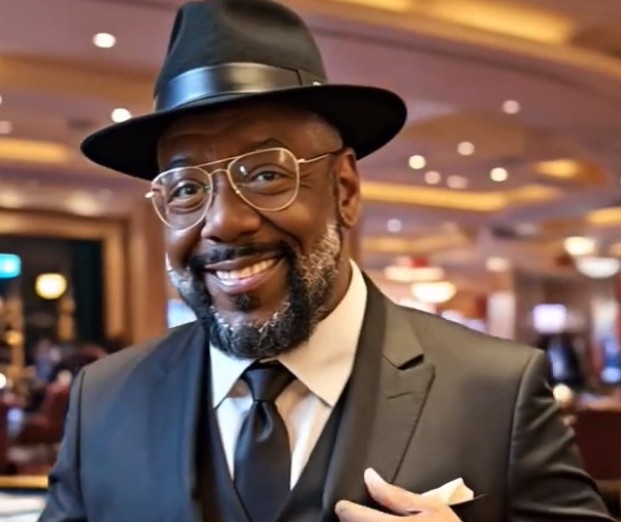
Owner/CEO/Host
🎤 Master Silk
No fairytales. No filters. Just lived experience and hard-earned clarity.
Master Silk was born and raised on the South Side of Chicago and shaped by worlds most people only hear about from a distance.
He has lived on both sides of the line — the streets and the boardroom — and understands the real consequences of decisions involving money, relationships, power, and survival.
His experience spans military service, business ownership, legal training, and fatherhood — both biological and chosen. Nothing here is theoretical. Every lesson shared on this platform comes from experience that carried real risk, real responsibility, and real outcomes.
Background & Credentials
Master Silk’s path includes work in adult and nightlife businesses, corporate ventures, real estate, and legal environments where contracts, accountability, and consequences matter.
His formal education includes:
A Juris Doctorate
Doctoral-level study in psychology
Certifications in financial planning and financial counseling
This combination allows him to speak clearly about behavior, money, boundaries, and decision-making from both practical and professional perspectives.
Why People Listen
Master Silk doesn’t offer motivation or fantasy outcomes.
He talks about:
What decisions actually cost
Where people get confused instead of honest
How power is rebuilt quietly, not loudly
Why clarity matters more than comfort
Women in particular connect …Read More


